

Category: Booklets & Journals
-

Confessional Standards for a Confessing Church
From the Publisher’s Note: […] The term “confessing church†has come to mean something altogether different in the current Presbyterian context, however, as right-wing organizations seek to use confessional statements as theological sledgehammers to bludgeon Presbyterians into a rigid orthodoxy that divisively excludes certain persons from ecclesiastical leadership. It is in this context that Union Theological Seminary— Presbyterian School of Christian
-
Peace, Unity, and Purity?
From the Publisher’s Note: The Theological Task Force on Peace, Unity, and Purity of the Church was created by the 213th General Assembly (2001) in a denominational context of polarization.… In the pages that follow, you are invited to engage this process of consideration via the ruminations of three leaders of the church. It is my hope that these
-
Congregational Transformation
This booklet is about Congregational Redevelopment and is one in a series of how-to booklets produced by the Evangelism and Church Development Program Area of the Presbyterian Church (U.S.A.). To redevelop a congregation is to redirect its ministry in response to significant changes that may have taken place either among its membership or in the
-

New Church Development
This booklet is one in a series produced by the Evangelism and Church Development Program Area of the National Ministries Division of the Presbyterian Church (U.S.A.). It is designed to introduce the visions, values, convictions and concerns under girding the development of new worshiping congregations in the 21st century.
-
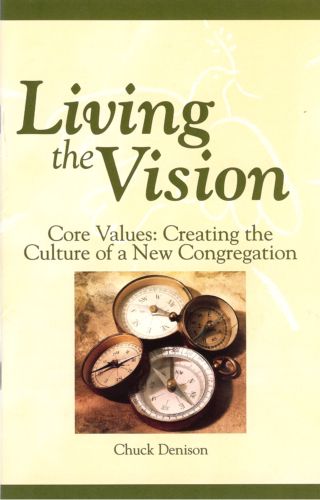
Core Values: Creating the Culture of a New Congregation
From the Introduction: A new church begins with a dream. Whether it begins with a presbytery commission or a group of residents, somewhere the dream is born. As the dream matures and starts to take shape, a pastor is called and charged with the responsibility of developing a handful of people into that dream church.
-
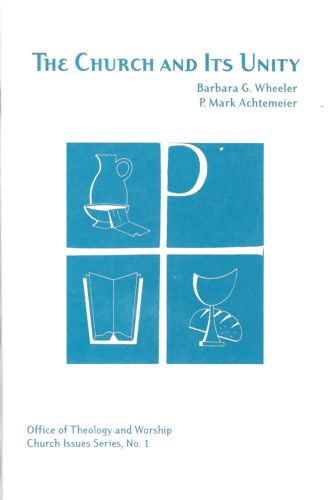
The Church And Its Unity
In “True Confession: A Presbyterian Dissenter Thinks about the Church,†Barbara Wheeler speaks honestly about issues that divide the church, yet calls for the maintenance of God-given unity. Mark Achtemeier acknowledges that frustration with continuous controversy sometimes leads to the desire for separation, yet he sets forth “Seven Theses on the Unity of the Church.â€
-
Committed Conversation
Three essays: “Church Fears”, “Body Language” and “A Grammar of Committed Conversation.” These offer an analysis of the current divisions in the church and an ecclesially faithful way to talk about these divisions.
-

Biblical Authority For The Life Of The Church
This important paper, number 3 in the Office of Theology and Worship’s “Church Issues Series,” was produced by the United Reformed Church in the United Kingdom. It is valuable to Presbyterians because it illuminates unity/diversity matters by providing fresh perspectives on the crucial question of the Bible’s authority in the church and by providing scriptural
-

The Crucified One Is Lord
How shall Christians confess their faith in the midst of people whose beliefs are different? What is the shape of the faith that Christians confess? What should be the church’s stance toward other faith traditions? The Office of Theology and Worship wishes to contribute to the church’s consideration of the issue by making available to
-

Bearing With One Another
The author goes to the sources, exploring impulses to unity within the reformed tradition. Dr. Sorge’s reading of Calvin, set within the context of Ephesians 4, shows that concern for theological integrity and commitment to the church’s unity are not at odds. To the contrary, it is theological integrity that is the ground for preserving